
A recoil starter rope looks simple, but it’s one of the parts that fails first in real use. Customers usually describe the problem as: “It frayed,” “It snapped,” or “It feels rough after a few weeks.”
At Yeahparts, we wanted a clear answer for one common question from dealers and repair shops:
Should recoil starter rope be polyester (PET) or nylon (PA)?
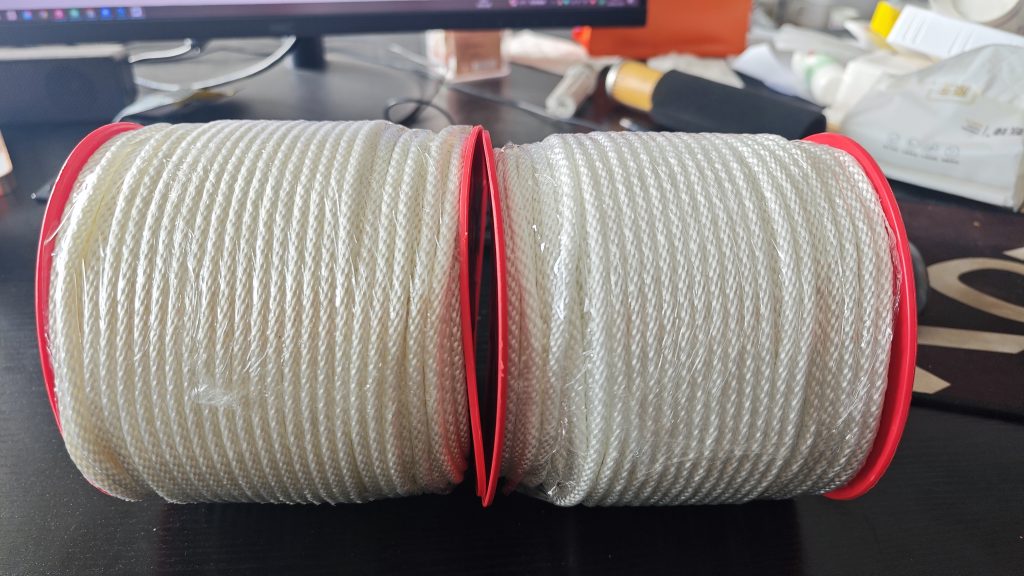
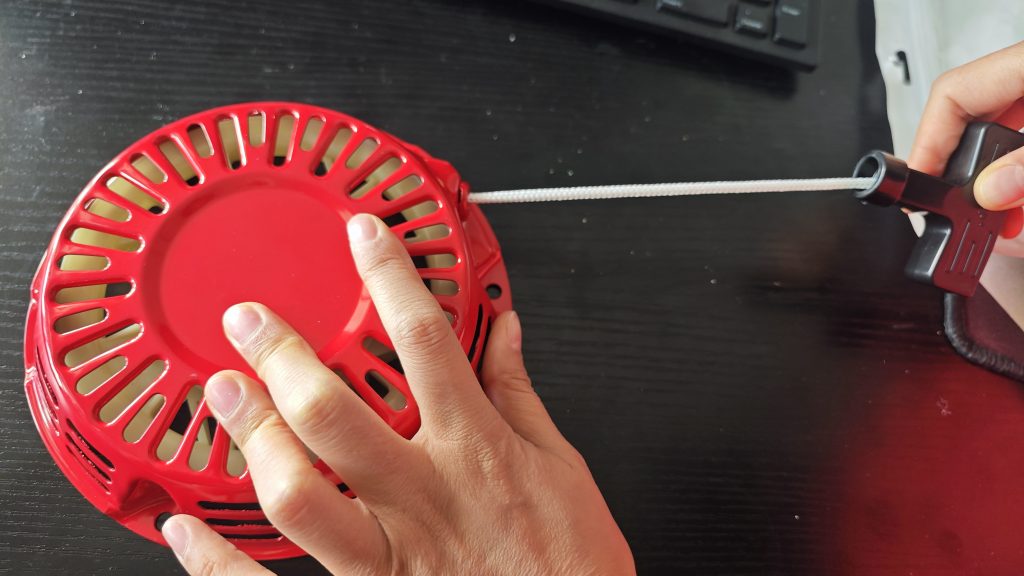
Instead of relying on claims from suppliers, we did our own side-by-side comparison using the same recoil starter setup and typical pull behavior found on small engines (mowers, generators, trimmers).
What we compared (simple and practical)
We focused on the things that actually cause rope failure:
Abrasion resistance
A recoil rope constantly rubs against the guide and housing. Friction is the main reason it frays.Shock load during pulling
When a user pulls fast, the rope experiences a sudden load. Material “give” (stretch) affects how harsh that load is.Heat from friction
Repeated pulls create heat at the rope guide area, especially in high-cycle use.Outdoor & moisture behavior
Some ropes are stored in garages, trucks, or outdoor environments. Moisture and UV exposure matter.Cost vs service life
Dealers don’t just want the lowest price — they want fewer complaints and returns.
What we found
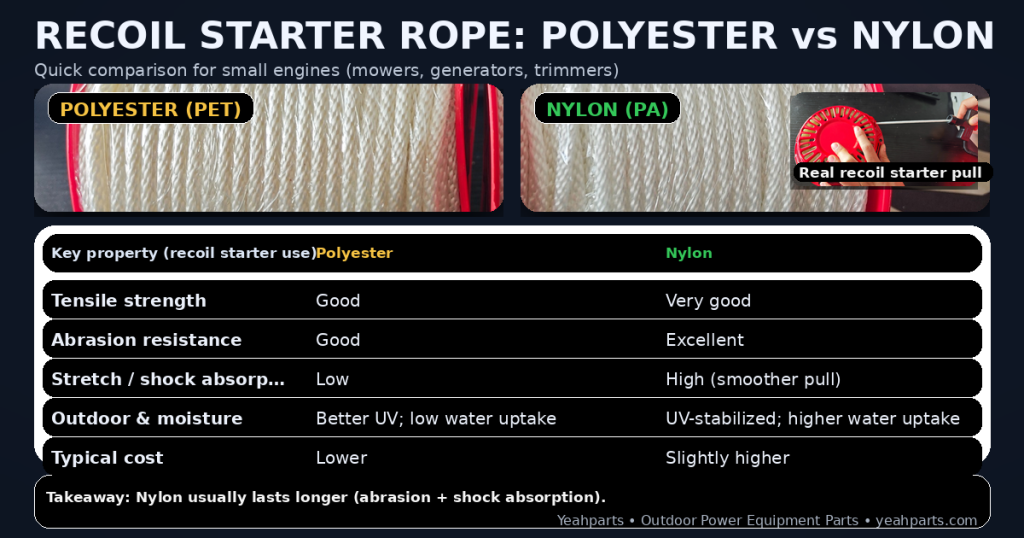
1) Nylon resists wear better in high-cycle pulling
In repeated use, nylon rope tends to stay cleaner and fray less at the high-friction points.
For high-frequency start applications, this matters most.
2) Nylon “pull feel” is smoother
Nylon has higher elasticity, which helps absorb sudden load.
That reduces the “hard jerk” feeling and can lower stress on the rope under aggressive pulling.
3) Polyester is more stable for outdoor exposure
Polyester generally shows better UV/weather stability and absorbs less moisture.
If the equipment is frequently stored outdoors, polyester can be a safer choice unless nylon is UV-stabilized.
4) Cost difference is real — but so is the result
Polyester is usually lower cost. Nylon is slightly higher.
But if the product is used often, the extra durability of nylon can reduce replacements and after-sales issues.
Our conclusion (simple)
✅ For most recoil starters with frequent use, nylon (PA) is usually the better rope choice.
It tends to last longer due to stronger abrasion resistance and better shock absorption.
Polyester (PET) still makes sense when:
equipment is stored outdoors long-term,
UV exposure is a big concern,
or the goal is a lower-cost option with acceptable performance.
Why we share this
At Yeahparts, we believe quality isn’t just “higher specs.”
Quality is knowing what happens after hundreds or thousands of pulls — and choosing the material that matches the customer’s real use case.
If you’re a dealer, repair shop, or distributor and you want:
rope diameter/length suggestions,
matching recoil starter assemblies,
or consistent supply for your market,
Reach out to Yeahparts — we build parts based on real comparisons, not guesswork.
Yeahparts | Outdoor Power Equipment Parts | yeahparts.com

Add comment