
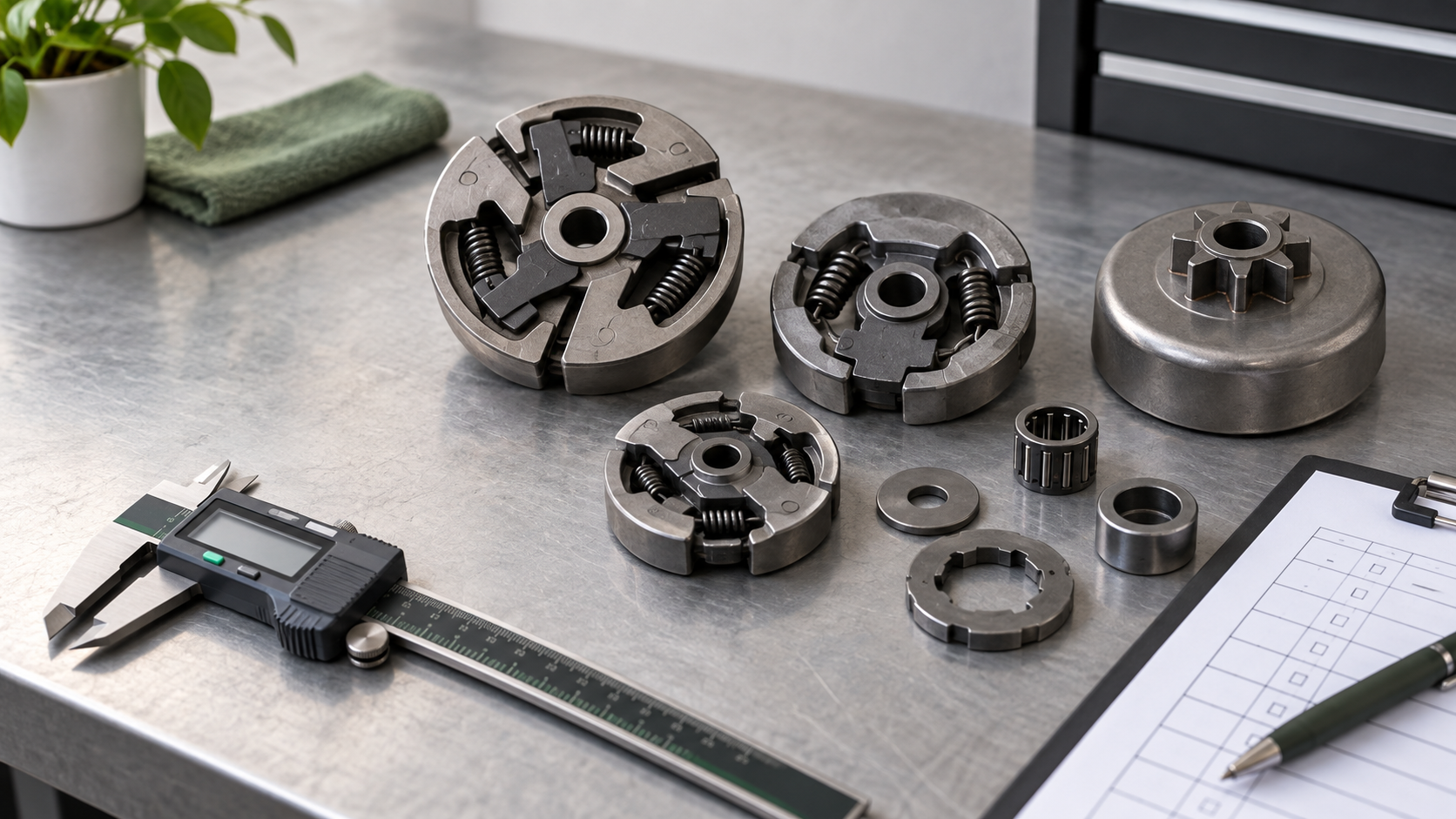
Chainsaw clutch sourcing gets expensive when a familiar shape becomes an approval
A distributor may receive a clutch request as an original reference, an equipment model, a sample, or a photograph from a repair branch. Each can start a search, but none should close the fitment decision by itself. Similar-looking clutch assemblies can belong to different applications, use different interfaces, or be quoted with a different set of related components.
For dealers, importers, wholesalers, aftermarket retailers, and repair networks, the real purchasing job is to turn an incomplete request into a reviewable record. A controlled process for wholesale chainsaw clutches helps catalog, purchasing, technical, and receiving teams compare the same evidence. The goal is not to make an engineering decision from a checklist; it is to expose assumptions before they become stock, listing, or return problems.
Define the item and the approval boundary first
Keep the buyer’s original request unchanged, then create a separate comparison row for every supplier candidate. Do not replace the requested part number with a proposed cross-reference or widen one confirmed application to an entire model family. The source request, supplier proposal, and buyer approval are three different records.
| Review layer | Buyer question | Useful evidence |
|---|---|---|
| Source | What exactly did the buyer request, and where did it come from? | Original reference, model information, source file, or labeled sample photos |
| Application | Which equipment and configuration fall inside the requested scope? | Model and series context, supplier application statement, and exceptions |
| Interface | Which physical features must match? | Named measurement points, mounting or thread details, orientation, and controlled images |
| Commercial unit | What is included in the quoted line? | Clutch assembly, related components where offered, unit of sale, and packaging request |
| Approval | What is confirmed, open, or rejected? | Reviewer, date, evidence source, decision, and approved application boundary |
Use an eight-point chainsaw clutch fitment checklist
1. Preserve the original reference and source
Record the part number exactly as received, including spaces, dashes, and suffixes. Note whether it came from a catalog, service record, prior order, equipment label, or physical sample. If your team normalizes references for search, keep the normalized value in a separate field so the original source remains auditable.
2. Capture the complete equipment context
Ask for the chainsaw model, series, and any configuration information the buyer can verify. Avoid assuming that a reference found beside one model automatically covers every related model. If the application range is still uncertain, label it as buyer review required instead of converting it into a broad catalog statement.
3. Separate the request from the supplier candidate
Give every offer its own candidate code. A chainsaw clutch supplier may propose a direct match, an alternative, or a component with a stated application relationship. Record that statement as supplied evidence, not as a silently approved interchange. The buyer’s requested number should never disappear from the comparison file.
4. Document the physical interface with named points
Request clear views of the clutch face, back, center interface, shoes, springs, and any other feature the buyer treats as fitment-critical. Measurements should identify their start and end points, unit, and evidence source. Thread form, direction, bore, hub, offset, and clearance details should be confirmed for the specific candidate where relevant; do not infer them from general appearance.
5. Define the component scope around the clutch
A quotation may cover an assembly only or may mention a drum, sprocket, bearing, washer, tool, or other related item. Do not assume those pieces are included. Put included items and excluded items in explicit fields, and ask the supplier to resolve any unclear bundle description before price comparison.
6. Control photographs and sample identity
Use a consistent image sequence and tie every file to the RFQ row: overall view, front, back, center interface, side profile, and measurement views. If a sample is used, assign it an internal ID and keep photos, measurements, supplier response, and buyer decision under that same ID. Unlabeled images are not reusable evidence.
7. Record exceptions instead of filling gaps with assumptions
Use clear status values such as confirmed, not confirmed, not applicable, and buyer review required. A blank cell should never mean yes. Name the owner of each open question and keep the quotation on hold if the unresolved point could change application, included scope, or catalog wording.
8. Preserve the approved version for reorders
After approval, freeze the evidence set used for that decision: candidate code, images, measurements, application statement, quoted scope, packaging instruction, reviewer, and date. If any field changes on a later offer, create a new review version instead of overwriting the record that supported the earlier order.
Build one controlled RFQ row per candidate
A practical worksheet for aftermarket replacement chainsaw clutches can include:
- buyer row ID, original reference, exact wording, and evidence source;
- equipment model, series, configuration notes, and requested application boundary;
- supplier candidate code and the supplier’s stated relationship to the request;
- interface description, controlled dimensions, units, and named measurement points;
- front, back, side, center-interface, and measurement image filenames;
- assembly-only or bundle scope, included and excluded related components, and unit of sale;
- quantity, packaging and labeling request, destination needs, and document request;
- open exceptions, owner, reviewer, decision, date, and approved catalog wording.
The same recordkeeping discipline used for mower-parts cross-reference data applies here: preserve the source, separate proposed relationships from approved ones, and make every change traceable.
Understand where weak clutch data creates cost
Visual similarity can trigger the wrong purchase
Two candidates can look close in a marketplace thumbnail yet differ in an interface or application detail that matters. When a buyer approves from a general photo, the hidden cost can include a reopened RFQ, catalog corrections, branch questions, relabeling, or returns. A row-specific evidence set makes the uncertainty visible before inventory is committed.
Bundle ambiguity makes prices incomparable
One quoted line may describe a clutch assembly while another includes or excludes related components. Comparing only the unit price can reward the narrowest description. Normalize the commercial unit and included scope first, then compare price, documentation completeness, packaging response, and exception handling.
Unreviewed cross-references spread quickly
A proposed relationship can move from an email into a purchasing sheet, web catalog, marketplace feed, and reorder file. If its source and approval status are missing, later teams may treat a tentative match as established fact. Keep provenance and approval beside the relationship wherever the data travels.
Mixed evidence creates receiving disputes
If one candidate’s image is attached to another candidate’s measurement row, neither purchasing nor receiving can reconstruct the decision reliably. Consistent IDs and filenames reduce that risk and give the receiving team a usable reference when goods arrive.
Compare suppliers on evidence quality as well as price
Send the same worksheet to every candidate. A useful response identifies the proposed item, answers the requested fitment fields, provides candidate-specific images or documents, distinguishes confirmed facts from open points, and states what the quotation includes. Response speed matters, but a fast price with weak evidence transfers review work back to the buyer.
Start with a focused group of references that has clear source data and meaningful demand. Close exceptions before expanding the range. If samples are part of your normal approval process, decide in advance what will be compared, who will record the result, and which application boundary an approval covers. The process should produce a reusable purchasing record, not a one-time inbox decision.
Where Yeahparts fits
Yeahparts presents aftermarket replacement parts for outdoor power equipment. Its current clutches category shows application- and reference-based clutch listings, while the broader chainsaw parts category helps buyers review adjacent product scope. Buyers can submit a controlled reference list and ask which current listings or alternatives fall within the available range. Fitment, included components, packaging, and commercial terms still need confirmation for each inquiry.
Buyer FAQ
Is an original part number enough to approve a chainsaw clutch?
No. It is a strong starting reference, but buyers should also confirm the intended equipment context, the candidate’s physical interface, application statement, quoted scope, and any open exceptions.
Can buyers approve a clutch from photographs?
Photographs can support the review, but they should be candidate-specific and paired with controlled measurements, reference data, and application evidence. A similar outline is not proof of interchangeability.
What should a chainsaw clutch RFQ include?
Include the original reference and source, equipment context, required views and measurements, requested quantity and unit, included-scope questions, packaging request, destination needs, and an explicit exception field.
How should a supplier-proposed alternative be stored?
Keep it in a separate candidate field, attach the supplier’s supporting evidence, list differences and open questions, and wait for authorized buyer approval before publishing or reusing the relationship.
How can distributors make reorders safer?
Retain the approved candidate code, evidence set, commercial scope, packaging instruction, reviewer, and date. Treat any later change to those fields as a new review event rather than silently updating the old record.
Prepare a focused clutch list for review
Organize each source reference, equipment context, candidate code, interface evidence, component scope, quantity, packaging request, and open question in one controlled file. Send that focused chainsaw clutch list to Yeahparts for a current product-scope and quotation review.

Add comment